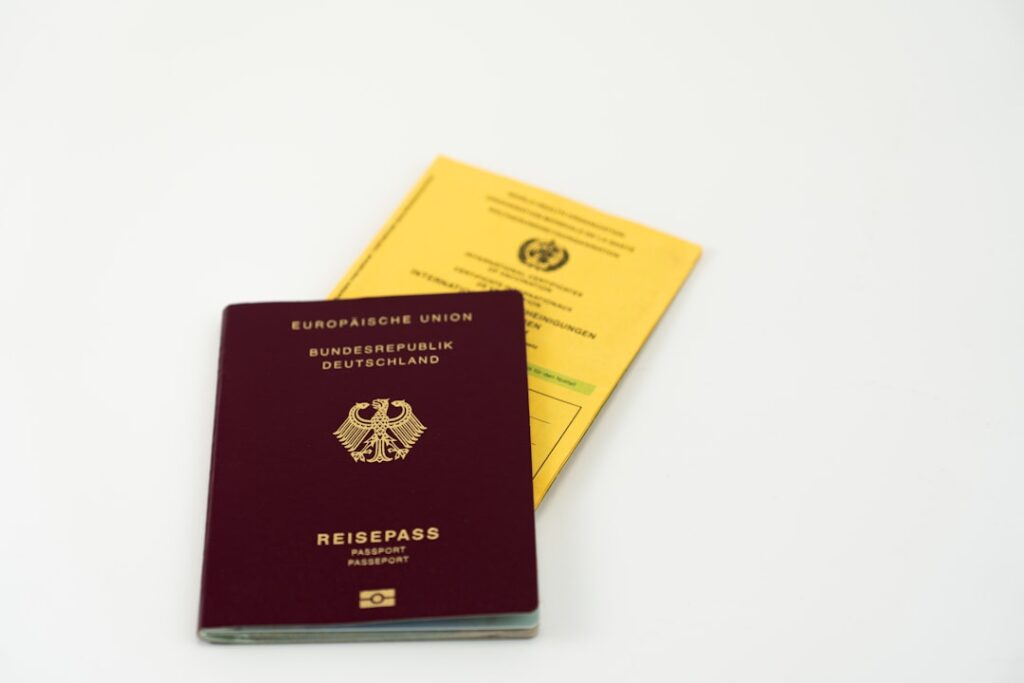
Applying for an ITIN (Individual Taxpayer Identification Number): A Comprehensive Guide for Spouses and Dependents Ineligible for an SSN – Form W-7 and Passport Submission Rules
For U.S. tax purposes, obtaining an Individual Taxpayer Identification Number (ITIN) is essential for spouses and dependents who are ineligible for a Social Security Number (SSN) but need to be listed on a tax return. An ITIN is a nine-digit tax processing number issued by the U.S. Internal Revenue Service (IRS) to individuals who are required to have a U.S. taxpayer identification number but do not have, and are not eligible to obtain, an SSN. This often applies to foreign national spouses and dependents of U.S. citizens, permanent residents, or resident aliens who file U.S. tax returns. This comprehensive guide details the ITIN application process, focusing on completing Form W-7, Application for IRS Individual Taxpayer Identification Number, and understanding the stringent rules for submitting original passports or IRS-certified copies, ensuring a complete understanding for all readers.
ITIN Basics: Why It’s Needed and Who It’s For
What is an ITIN?
An ITIN, or Individual Taxpayer Identification Number, is a tax processing number issued by the IRS. It is distinct from an SSN; an ITIN does not authorize employment in the U.S., provide eligibility for Social Security benefits, or imply any immigration status. Its sole purpose is to serve as a tax identification number for individuals who must file U.S. tax returns or be listed on them, but who do not have and cannot obtain an SSN.
Who Needs an ITIN?
An ITIN is primarily required by individuals who have a U.S. tax filing or reporting requirement but are not eligible for an SSN. This includes, but is not limited to, the following categories:
- Nonresident aliens who are required to file a U.S. tax return.
- Resident aliens (based on days present in the U.S.) who are required to file a U.S. tax return.
- Spouses of U.S. citizens/resident aliens who do not have an SSN.
- Dependents of U.S. citizens/resident aliens who do not have an SSN.
- Foreign nationals claiming a tax treaty benefit.
For instance, if a U.S. citizen or resident alien wishes to file a “Married Filing Jointly” tax return with a foreign national spouse who does not have an SSN, that spouse must obtain an ITIN. Similarly, if a taxpayer wants to claim a foreign-born child as a dependent to qualify for tax credits such as the Child Tax Credit or Credit for Other Dependents, that child will need an ITIN.
Detailed Analysis: The ITIN Application Process and Form W-7
Completing Form W-7: Step-by-Step Guidance on Key Sections
The core of the ITIN application is IRS Form W-7, Application for IRS Individual Taxpayer Identification Number. Accurate and complete submission of this form is critical for a successful application.
Key Sections of Form W-7 Explained:
- Reason for Applying: This is arguably the most crucial section. For spouses and dependents who cannot obtain an SSN, you will typically select one of the following:
- d. Spouse of a U.S. citizen/resident alien: Choose this if the applicant is a spouse of a U.S. citizen or a resident alien.
- e. Dependent of a U.S. citizen/resident alien: Select this if the applicant is a dependent of a U.S. citizen or a resident alien.
These selections generally require you to attach a valid federal income tax return with your ITIN application.
- Applicant Information: Provide the applicant’s full legal name, country of birth, date of birth, and gender exactly as they appear on the supporting identification document (e.g., passport). Any discrepancies can lead to delays or rejection.
- Mailing Address: This is where the IRS will send the ITIN assignment letter (CP565 Notice). It can be a U.S. or foreign address. Ensure it is accurate and complete to avoid mail delivery issues.
- Foreign Address: If the applicant resides outside the U.S., this section must be completed.
- Foreign Tax Identification Number (FTIN): If the applicant has a tax identification number from their home country (e.g., a national ID number used for tax purposes), it should be entered here. This field is not mandatory if no such number exists.
- Identification Document: Detail the type of document being submitted (e.g., passport), the issuing country, the document number, and its expiration date. This information must precisely match the document provided.
Supporting Documentation: Proving Identity and Foreign Status
The most rigorous requirement for an ITIN application is the submission of original identification documents or certified copies. The IRS requires documentation that proves both the applicant’s identity and foreign status. For most spouses and dependents, a valid foreign passport is the preferred and most straightforward document.
Acceptable Documents and the ‘Original vs. Certified Copy’ Rule:
The IRS accepts a limited number of original documents. For spouses and dependents, the most commonly used document is:
- Original Valid Foreign Passport: This is the strongest and generally most accepted document as it proves both identity and foreign status.
Other documents may be accepted, sometimes in combination, especially for minor dependents:
- National identity card (must include photo, name, current address, date of birth, and expiration date).
- Foreign driver’s license.
- Civil birth certificate (often used for dependents).
- Medical records (for dependents under 6).
- School records (for dependents under 18).
The Critical Distinction: Original vs. IRS-Certified Copy
The IRS has very specific requirements for what constitutes a ‘certified copy.’ It is crucial to understand that a copy notarized by a general notary public (e.g., from a bank or local notary service) is typically NOT acceptable to the IRS for ITIN applications. An IRS-acceptable certified copy must be one of the following:
- Original Documents: The most direct method is to mail your actual original documents to the IRS. While this is straightforward, it carries the inherent risk of loss in transit and the inconvenience of being without your vital documents (like a passport) for several weeks or months while the application is processed and documents are returned.
- Certified Copies from the Issuing Agency: This refers to a copy of a document that the original issuing agency (e.g., the passport agency, embassy, or consulate that issued your passport) has certified as an exact copy of the original. For a Japanese passport, this would mean a certified copy issued by the Japanese Ministry of Foreign Affairs or a Japanese embassy/consulate. This is often a lengthy and complex process to obtain.
- Certified Copies by an IRS-Authorized Acceptance Agent (AA): An Acceptance Agent is an individual or entity (often a tax professional) authorized by the IRS to assist applicants in obtaining ITINs. An AA can verify the applicant’s original identification documents and then submit copies of those documents to the IRS, eliminating the need for the applicant to mail their original documents. This method offers peace of mind and significantly reduces the risk associated with sending originals.
- Certified Copies by an IRS Taxpayer Assistance Center (TAC): You can schedule an appointment at certain IRS Taxpayer Assistance Centers (TACs) in the U.S. Bring your original documents, and an IRS employee can verify them and certify copies on the spot, returning your originals to you immediately. However, not all TACs offer this service, so it’s essential to confirm availability and make an appointment in advance.
Given the risks and inconvenience of sending original documents, utilizing an IRS-authorized Acceptance Agent or visiting an IRS TAC (if available) are highly recommended alternatives.
Attaching Your Federal Income Tax Return
Generally, an ITIN application (Form W-7) must be submitted along with a valid federal income tax return (e.g., Form 1040, U.S. Individual Income Tax Return; Form 1040-NR, U.S. Nonresident Alien Income Tax Return). The purpose of the ITIN is to allow the individual to be processed on a U.S. tax return. Therefore, the tax return must show the applicant’s name in the appropriate section (e.g., spouse’s name for Married Filing Jointly, dependent’s name for a claimed dependent) with “Applied For” written in the SSN field. This ensures the IRS understands why the ITIN is being requested.
Submission and Processing
Once Form W-7, the required original or certified identification documents, and the federal income tax return are prepared, they should be mailed to the specific IRS address designated for ITIN applications. If using an Acceptance Agent, the agent will handle the submission. The processing time for an ITIN application typically ranges from 7 to 14 weeks, but it can take longer depending on the time of year (e.g., during tax season) and IRS workload. After processing, the IRS will mail a CP565 Notice informing the applicant of their newly assigned ITIN.
Case Studies / Practical Examples
Case Study 1: U.S. Citizen Filing Jointly with a Non-U.S. Spouse
John, a U.S. citizen, is married to Mariko, a non-U.S. citizen from Japan. Mariko does not have work authorization in the U.S. and is therefore ineligible for an SSN. John wishes to file a “Married Filing Jointly” tax return with Mariko to benefit from more favorable tax rates and deductions.
- ITIN Requirement: For John to file jointly with Mariko, she must obtain an ITIN.
- Form W-7 Completion: Mariko completes Form W-7, selecting “d. Spouse of a U.S. citizen/resident alien” as her reason for applying.
- Supporting Documentation: Mariko has a valid Japanese passport. To avoid mailing her original passport, she contacts an IRS-authorized Acceptance Agent. The AA reviews her original passport, certifies a copy, and prepares the ITIN application package.
- Tax Return: John prepares Form 1040, indicating “Married Filing Jointly,” and writes “Applied For” in the SSN field for Mariko.
- Submission: The Acceptance Agent submits Mariko’s Form W-7, the certified passport copy, and John’s Form 1040 to the IRS.
- Outcome: Upon receipt of Mariko’s ITIN, John and Mariko can file their tax return as Married Filing Jointly, potentially doubling their standard deduction and benefiting from lower tax brackets.
Case Study 2: U.S. Resident Alien Claiming a Foreign-Born Child as a Dependent
Sarah is a resident alien in the U.S. on an L-1 visa. She wants to claim her 10-year-old daughter, Yui, who lives in Japan, as a dependent on her U.S. tax return to qualify for the Child Tax Credit. Yui does not have an SSN and is not eligible for one.
- ITIN Requirement: For Sarah to claim Yui as a dependent and potentially receive the Child Tax Credit, Yui needs an ITIN.
- Form W-7 Completion: Sarah completes Form W-7 on behalf of Yui, selecting “e. Dependent of a U.S. citizen/resident alien” as the reason for applying. As Yui is a minor, Sarah signs the form as the responsible party.
- Supporting Documentation: Sarah uses Yui’s original Japanese birth certificate to prove identity and foreign status. She opts to mail the original birth certificate to the IRS, understanding the risks involved. (Alternatively, she could have used an Acceptance Agent if Yui’s passport was available).
- Tax Return: Sarah prepares her Form 1040, listing Yui as a dependent and writing “Applied For” in Yui’s SSN field.
- Submission: Sarah mails Yui’s Form W-7, the original birth certificate, and her Form 1040 to the IRS.
- Outcome: Once Yui’s ITIN is issued, Sarah can correctly claim Yui as a dependent and, if all other criteria are met, claim the Child Tax Credit, reducing her overall tax liability.
Benefits and Limitations (Pros & Cons) of Obtaining an ITIN
Benefits (Pros)
- Enables Proper Tax Filing: Allows individuals ineligible for an SSN to comply with U.S. tax laws and be correctly included on tax returns, such as filing “Married Filing Jointly” or claiming eligible dependents.
- Access to Tax Benefits and Credits: Qualifies taxpayers for certain tax benefits and credits, like the Child Tax Credit, Credit for Other Dependents, or education credits, which can significantly reduce tax liability.
- Avoids Penalties: Prevents potential penalties for incorrect or incomplete tax returns that might arise from not having an identification number for a spouse or dependent.
- Facilitates Financial Activities: While not its primary purpose, an ITIN may sometimes be accepted by financial institutions for opening bank accounts or applying for loans, although it does not confer any immigration or work benefits.
Limitations (Cons)
- Risk of Mailing Original Documents: Submitting original passports or birth certificates carries a risk of loss or damage during transit, and the inconvenience of being without these vital documents for an extended period.
- Lengthy Processing Time: The application process can take several weeks or even months, requiring applicants to plan well in advance, especially around tax filing deadlines.
- No Work Authorization or Immigration Benefits: An ITIN is solely for tax purposes. It does not provide the right to work in the U.S., nor does it confer any immigration status or path to permanent residency.
- No Social Security Benefits: ITIN holders are not eligible for Social Security benefits, Medicare, or other federal benefits tied to an SSN.
Common Pitfalls and How to Avoid Them
- Incorrectly Completed Form W-7: Errors in selecting the reason for applying, misspellings of names, incorrect dates of birth, or inconsistencies with identification documents are common. Always double-check all information against your supporting documents.
- Submitting Unacceptable Identification Documents or Copies: A common mistake is submitting a copy notarized by a general notary public, which the IRS will reject. Ensure you provide an original document, an IRS-certified copy from the issuing agency, or use an IRS-authorized Acceptance Agent.
- Failure to Attach a Valid Federal Income Tax Return: Most ITIN applications must be accompanied by a completed federal income tax return. Forgetting this will cause the ITIN application to be rejected.
- Applying for an ITIN When Eligible for an SSN: If an individual is eligible for an SSN (e.g., has work authorization or permanent residency), they should apply for an SSN instead of an ITIN. The IRS will reject an ITIN application if the applicant is eligible for an SSN.
- Not Keeping Copies of All Submitted Documents: Before mailing your application, make copies of everything: Form W-7, the tax return, and all supporting identification documents. This is crucial for your records and for responding to any IRS inquiries.
- Ignoring Tax Filing Deadlines: The lengthy ITIN processing time means you must plan ahead. If the ITIN is not issued by the tax deadline, you may need to file an extension (Form 4868) for your tax return.
Frequently Asked Questions (FAQ)
Q1: How long does it take to get an ITIN?
A1: Typically, it takes the IRS 7 to 14 weeks to process an ITIN application and mail the ITIN assignment letter (CP565 Notice). However, processing times can vary depending on the time of year (e.g., during peak tax season) and the volume of applications the IRS is handling. Incomplete applications will lead to delays or rejection.
Q2: What if I don’t want to mail my original passport to the IRS?
A2: If you prefer not to mail your original passport, you have two primary alternatives. First, you can use an IRS-authorized Acceptance Agent (AA). An AA can verify your original documents, certify copies, and submit the application to the IRS on your behalf, allowing you to retain your original documents. Second, you can make an appointment at an IRS Taxpayer Assistance Center (TAC) that offers ITIN document authentication services. Bring your original documents, and an IRS representative can authenticate them and return them to you immediately while submitting the certified copies with your application. Always confirm services and make an appointment beforehand.
Q3: Does an ITIN allow me to work in the U.S. or lead to permanent residency?
A3: No, an ITIN is solely for tax administration purposes. It does not provide authorization to work in the U.S., grant any immigration benefits, or qualify you for Social Security benefits. It is simply a number to identify you for U.S. tax filing obligations.
Q4: Do ITINs expire?
A4: An ITIN itself does not expire. However, if an ITIN is not used on a federal tax return for three consecutive tax years, it will become inactive. If you need to use an inactive ITIN again for tax purposes, you may need to reactivate it, which typically involves filing a tax return that includes the ITIN.
Q5: Should I hire a tax professional or an Acceptance Agent for my ITIN application?
A5: The ITIN application process can be complex, and errors can lead to significant delays or rejection. Given the precision required for Form W-7, the strict rules for supporting documentation, and the need to coordinate with a tax return, engaging a tax professional or an IRS-authorized Acceptance Agent is highly recommended. They possess the expertise to ensure your application is accurate, complete, and submitted correctly, minimizing stress and maximizing the chances of a timely approval. An Acceptance Agent, in particular, offers the invaluable benefit of preventing you from having to mail your original identification documents.
Conclusion
Obtaining an ITIN is a crucial step for spouses and dependents who are ineligible for an SSN but need to be included on a U.S. tax return. The process hinges on the accurate completion of Form W-7, particularly selecting the correct reason for applying, and adhering to the strict rules for submitting identity and foreign status documents. While mailing original passports is an option, the risks associated with it make the use of an IRS-authorized Acceptance Agent or an IRS Taxpayer Assistance Center a highly advisable alternative. The ITIN enables taxpayers to fulfill their tax obligations correctly and to claim eligible tax benefits. Although the process may seem daunting, with proper preparation, attention to detail, and professional guidance when needed, you can navigate it successfully. Always factor in the processing time for an ITIN when planning your tax filing strategy to ensure timely compliance.
#ITIN #Form W-7 #Taxpayer Identification Number #US Tax #Non-resident Alien #Dependents #Spouse Tax #IRS #Passport Certification