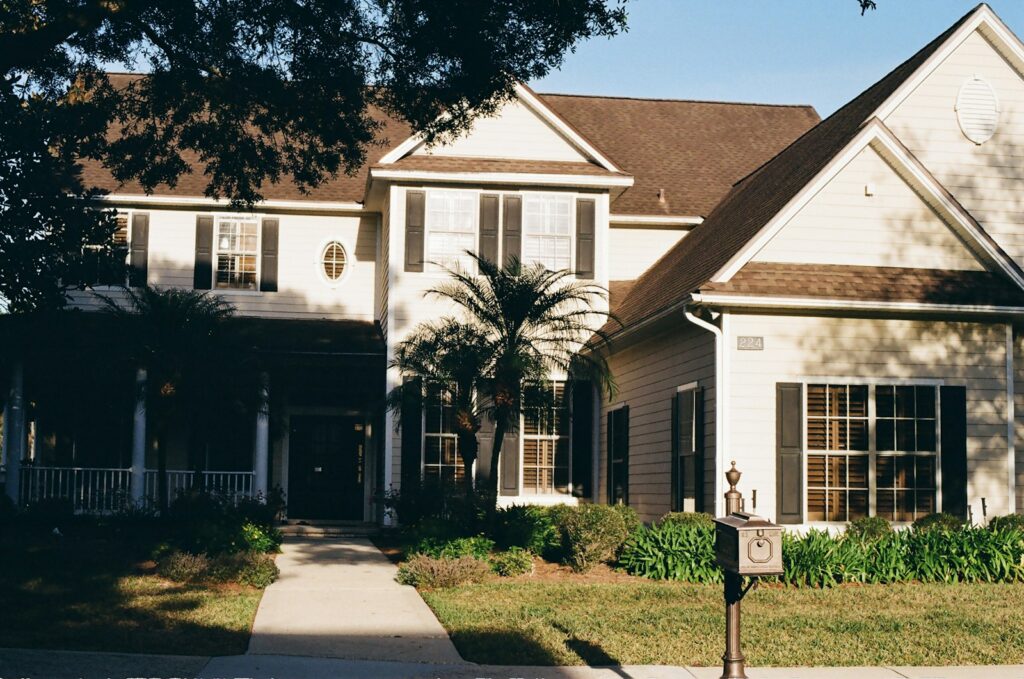
After an assignment, a degree, or a job in the United States ends and you move back to Japan, the house you left behind raises three questions: Can a nonresident still use the $250,000 home sale exclusion under Section 121? Will the buyer withhold 15% under FIRPTA? And will Japan tax the sale as well? This article walks through the U.S. and Japanese treatment of selling a former U.S. home after returning to Japan, and shows how the timing of the sale changes the answer. Rules are as of 2026.
The Section 121 Exclusion Is Available to Nonresidents
Section 121 allows you to exclude up to $250,000 of gain ($500,000 on a joint return) on the sale of a principal residence if, during the five years before the sale, you owned the home and used it as your principal residence for at least two years in total. The exclusion is not limited to U.S. residents. A nonresident alien who meets the ownership and use tests can claim it on Form 1040-NR. Key points:
- The two years need not be continuous; the test is cumulative within the five-year look-back. If you rent the home out after moving, you can still qualify as long as you sell within three years of moving out.
- Rental use after you move out is not treated as nonqualified use (under the post-2008 rules, periods after the last date the home was used as a principal residence are excluded from nonqualified use). However, depreciation claimed while renting cannot be excluded and is taxed at sale as unrecaptured Section 1250 gain at up to 25%.
- Once both spouses are nonresidents, a joint return is generally not available, so the $500,000 joint exclusion cannot be claimed. If the home is jointly owned, each spouse can exclude up to $250,000 on his or her share, provided each meets the ownership and use tests.
- If you fall short of the two-year requirement because of a job transfer (a new place of employment at least 50 miles farther from the home), a reduced exclusion prorated by the period of use may still be available.
FIRPTA Withholding: 15% When the Seller Is a Foreign Person
If the seller is a nonresident alien at the time of sale, the buyer must remit 15% of the amount realized (the full sale price, including any mortgage paid off at closing) to the IRS. No withholding is required if the buyer will use the property as a residence and the price is $300,000 or less; the rate is 10% if the buyer will use it as a residence and the price is more than $300,000 but not more than $1,000,000. The withholding is a prepayment, not the tax itself. You file Form 1040-NR the following year, apply the Section 121 exclusion and your basis, and claim a refund of the excess.
To avoid tying up cash, you can file Form 8288-B before closing to request a withholding certificate that reduces the withholding to the actual tax due, which is often zero once the exclusion is applied. The IRS typically takes about 90 days, so start at the contract stage and arrange for the buyer’s escrow agent to hold the funds pending the certificate. States may impose their own requirements: New York requires nonresident sellers to pay estimated tax at closing on Form IT-2663, and California generally withholds 3 1/3% of the sale price on Form 593.
No withholding if you sell before you leave
FIRPTA looks at the seller’s status on the date of the sale. If you are still a U.S. resident (a green card holder or someone who meets the substantial presence test) when the sale closes, you can give the buyer a non-foreign affidavit and no withholding applies. Because the year of departure is split into resident and nonresident periods, confirm which period the closing date falls in.
Japan: A Sale After Your Return Is Taxable There Too
Once you become a resident of Japan again, your worldwide income is subject to Japanese tax. The sale of your former U.S. home is reported in Japan as capital gain on real estate (separate taxation). If you owned the property for more than five years as of January 1 of the year of sale, the long-term rate of 20.315% applies; otherwise the short-term rate is 39.63%. The purchase price and sale price are each converted to yen at the exchange rate on the respective dates, so if the yen has weakened since you bought, the yen-denominated gain can be far larger than the dollar gain.
- The 30 million yen special deduction for a principal residence is not restricted to property in Japan. The National Tax Agency has confirmed in a published Q&A that it can apply to a former residence abroad, provided the sale occurs by December 31 of the third year after the year you stopped living there.
- The reduced rate for homes owned more than ten years and the replacement-home rollover apply only to property in Japan, so they are not available for a U.S. home.
- U.S. tax actually paid, as finally determined on Form 1040-NR (not the amount withheld), can be claimed as a foreign tax credit on your Japanese return.
- If you sell while you are still a nonresident of Japan, Japan does not tax the gain on foreign real estate.
| Timing of sale | United States | Japan |
|---|---|---|
| Before returning (still a U.S. resident) | Section 121 available; no FIRPTA withholding | Not taxed (nonresident of Japan) |
| After returning, within 3 years of moving out | Section 121 available on Form 1040-NR; 15% FIRPTA withholding (reducible via Form 8288-B) | Taxed as capital gain; 30 million yen deduction may apply; foreign tax credit |
| After returning, more than 3 years after moving out | Section 121 generally lost; depreciation recaptured | Taxed as capital gain; no 30 million yen deduction; foreign tax credit |
Frequently Asked Questions
I am renting the house out after returning to Japan. How long do I have to sell?
Sell within three years of the last day you lived there as your principal residence to satisfy the two-of-five-years test. Japan’s 30 million yen deduction also expires at the end of the third year after the year you moved out, so plan the sale around both deadlines.
The buyer withheld 15%. When do I get it back?
After the buyer or escrow agent remits the withholding on Forms 8288 and 8288-A, you claim the refund by filing Form 1040-NR the following year. Copy B of Form 8288-A must be attached, so make sure you receive and keep it. IRS processing can take several months or longer.
My gain will exceed $250,000. What can I do?
Make sure you have captured every capital improvement (kitchen remodel, roof replacement, and so on) in your basis and all selling costs such as commissions and closing fees. If the home is jointly owned, each spouse may be able to use a $250,000 exclusion. Because the yen-based gain in Japan will differ, compute both countries separately and review the results with an adviser.
This article is provided for general informational purposes only and does not constitute individual tax advice. Please review current IRS rules and Japanese tax law, and consult qualified tax professionals in both countries before acting.
Summary
Selling your former U.S. home after moving back to Japan does not cost you the Section 121 exclusion as long as you sell within three years of moving out, and you can claim it on Form 1040-NR. The trade-off is FIRPTA: a nonresident seller faces 15% withholding unless a Form 8288-B certificate reduces it, with the balance refunded on next year’s return. Japan will also tax the sale once you are a resident again, but the 30 million yen deduction can apply to a home abroad and U.S. tax is creditable. The two deadlines, three years from moving out for the U.S. exclusion and the end of the third year for the Japanese deduction, should drive your timing decision.
Related Articles
- Mastering Capital Gains Tax on US Home Sales: The $250,000 Exclusion Rule Explained
- FIRPTA Withholding Explained: The 15% Withholding on a Japanese Seller’s U.S. Real Estate Sale, and How to Get It Refunded
- Depreciation Recapture When Selling a US Rental Property: The Extra Tax Owners Often Overlook
- The Definitive Guide to Filing US Tax Returns (1040/1040NR) from Japan After Repatriation: Procedures, Payment, and Refund Methods