
Frequent business travelers, owners of U.S. vacation homes, and parents who spend months helping with grandchildren all share a hidden risk: spend enough days in the United States and the substantial presence test makes you a U.S. tax resident regardless of your visa, obligating you to report worldwide income, including a Japanese salary or rental income. One way to avoid that result is the closer connection exception, claimed on Form 8840. This article explains how the substantial presence test is computed, the three requirements of the exception, when it is unavailable, the filing deadline and the cost of missing it, and the treaty tie-breaker alternative for those who spend 183 days or more in the U.S. Rules are as of 2026.
The Substantial Presence Test: 183 Weighted Days over Three Years
A foreign national without a green card becomes a U.S. tax resident for a year if both of the following are true:
- You are present in the U.S. at least 31 days during the current year; and
- The total of all days in the current year, one third of the days in the prior year, and one sixth of the days in the second prior year is 183 or more.
Spending 120 days each year gives 120 + 40 + 20 = 180, below the threshold, but 122 days each year produces roughly 183 and triggers residency, which is why 122 days a year is the practical rule of thumb. Any day on which you are physically present for any part of the day counts, including arrival and departure days. Exceptions include commuters from Canada or Mexico, transit stays under 24 hours, days as an exempt individual (students, teachers, and trainees on F, J, M, or Q visas, within limits), and days you could not leave because of a medical condition that arose in the U.S. (exempt and medical days are reported on Form 8843).
The Three Requirements of the Closer Connection Exception
Even if you meet the substantial presence test, you are treated as a nonresident for the year if all three conditions are satisfied (Section 7701(b)(3)(B)):
- You were present in the U.S. fewer than 183 days during the current year (actual days, not weighted days);
- You maintained a tax home in a foreign country (Japan) throughout the year, meaning your main place of business or employment, or if none, your regular place of abode; and
- You had a closer connection to that foreign country than to the United States.
Factors that show a closer connection
The IRS weighs the location of your permanent home, your family, your personal belongings such as cars and furniture, the social, cultural, and religious organizations you belong to, where you conduct business, the country that issued your driver’s license, where you vote, and the country of residence you list on forms and documents (Form W-8BEN versus W-9, for example). A person with a home and family in Japan, a Japanese employer, and Japanese tax and resident tax filings will normally satisfy the test.
Two foreign countries
If you moved your tax home from Japan to a third country during the year, the exception can still apply if, for each period, you had a closer connection to that country and met additional conditions, including being taxed as a resident in each country.
Want an IRS Enrolled Agent to handle this for you? See your fee in a minute. See your fee →
When the Exception Is Not Available
- If you were present 183 days or more in the current year, the exception cannot be used; consider the treaty tie-breaker described below.
- If during the year you applied for lawful permanent residence or took affirmative steps toward it (such as an employer filing Form I-140, a relative filing Form I-130, or your filing Form I-485), you are treated as intending to become a permanent resident and cannot claim the exception.
- If Form 8840 is not filed on time, the exception is generally lost, unless you can show by clear and convincing evidence that you took reasonable actions to become aware of the requirement and significant steps to comply.
How and When to File Form 8840
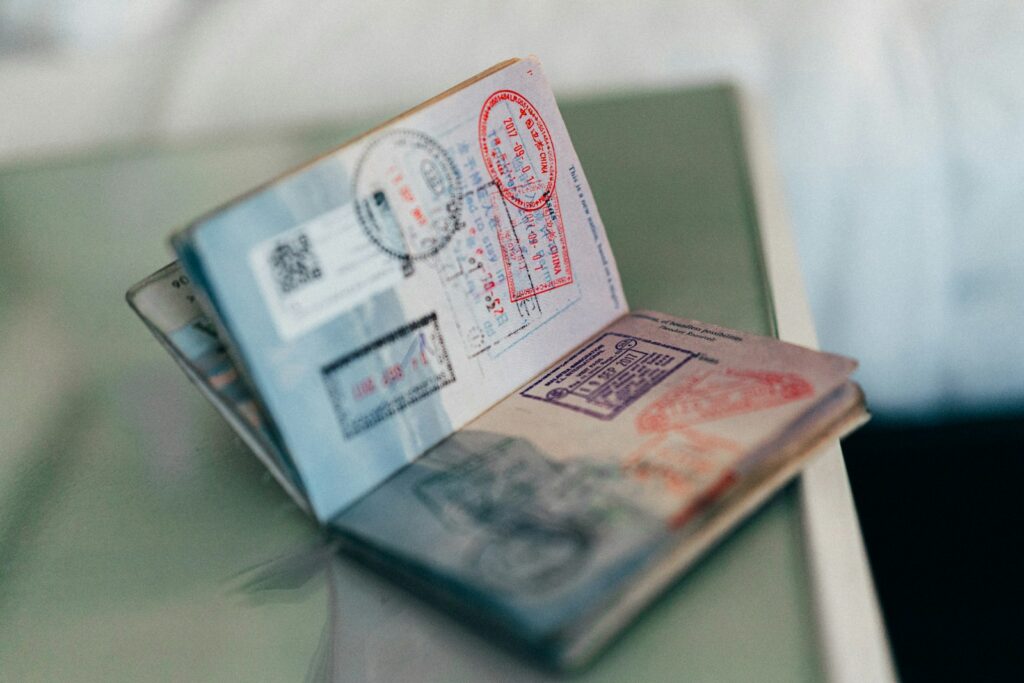
If you must file Form 1040-NR, attach Form 8840 to it. If you have no return to file, mail Form 8840 on its own to the IRS in Austin, Texas. The deadline follows the Form 1040-NR due date: June 15 of the following year if you had no wages subject to withholding, otherwise April 15. Each spouse must qualify separately and file his or her own Form 8840. Keep a record of your U.S. days every year (passport stamps, airline tickets, and your I-94 travel history).
183 Days or More: The Treaty Tie-Breaker
Once your actual days reach 183 in a year, the closer connection exception is off the table. If you are also taxed as a resident of Japan, however, Article 4 of the U.S.-Japan tax treaty resolves dual residency by looking, in order, at your permanent home, center of vital interests, habitual abode, and nationality, and you may be able to claim Japanese residence under the treaty. You do this by filing Form 1040-NR with Form 8833 (treaty-based return position disclosure). Two cautions: a treaty nonresident still has an FBAR filing obligation, and state residency is determined separately from federal residency (New York, for example, treats anyone who spends more than 183 days in the state and maintains a permanent place of abode there as a statutory resident).
Frequently Asked Questions
I visit the U.S. several times a year under ESTA. Do I need Form 8840?
If your three-year weighted total reaches 183 days while your actual days in the current year are fewer than 183, you need to file Form 8840 to be treated as a nonresident. If the weighted total is below 183, you do not meet the substantial presence test and no filing is needed, but keep your day count records.
Does owning a vacation home in the U.S. disqualify me?
Not by itself. If your principal home, family, and work are in Japan and your life is centered there, you can still meet the closer connection test. Rental income or gain on the sale of the vacation home is taxed in the U.S. regardless of your residency status.
I forgot to file Form 8840 for a prior year. What should I do?
File it as soon as possible with a statement explaining the delay and the reasonable steps you took to learn about the requirement. If the IRS does not accept the late filing, you may be treated as a resident for that year and required to report worldwide income, so seek professional advice.
This article is provided for general informational purposes only and does not constitute individual tax advice. Please review current IRS rules and the U.S.-Japan tax treaty, and consult a qualified U.S. tax professional before acting.
Summary
A pattern of 122 or more days a year in the United States can make you a tax resident under the substantial presence test. If your actual days in the year are fewer than 183, you keep a tax home in Japan, and your ties to Japan are closer, filing Form 8840 on time preserves nonresident treatment. The exception is unavailable to green card applicants, and late filings are generally not forgiven. For years with 183 days or more, the treaty tie-breaker and Form 8833 are the fallback, though FBAR and state residency rules remain. Tracking your days and filing on time is the surest way to avoid unexpected worldwide taxation.
Need help with your U.S. tax return? CLT NY INC. is run by an IRS Enrolled Agent and prepares individual returns (Form 1040, Form 1040-NR and state returns) in English or Japanese. All fees are published on our U.S. individual tax return service page, and the quote, payment, documents and progress are all handled in our own app.
Need help with your U.S. tax return?
An IRS Enrolled Agent who knows Japan-related filings (Japanese accounts, funds, foreign tax credit, dual-status years) prepares and signs your return. Answer a few questions and see your fee right away.
See your fee now →Individual tax returns →💬 Ask a question (AI or tax pro)
Takuya Yukimoto, IRS Enrolled Agent · Base fee $600 (federal), $200 per state return · Apply, pay and upload documents online.
Related Articles
- The Truth About the ‘183-Day Rule’: A Comprehensive Guide to the U.S. Substantial Presence Test for Tax Residency
- U.S. Tax Residency Determination for Expats & Students: A Comprehensive Guide to Choosing Form 1040 vs. 1040-NR
- Navigating the Strict State Taxes of New York and California: Residency Risks for Individuals Returning to Japan
- Understanding Tax Jurisdiction: The Fundamental Difference Between Citizenship-Based and Residency-Based Taxation
TAX PREPARER SWITCH CAMPAIGN
Switch your tax preparer and get 50% off your U.S. tax return this year.
Show us last year's invoice and we take 50% off the fee (up to $500, first year only). Prepared and signed by an IRS Enrolled Agent, in English or Japanese.
See the switch campaign →First time using a tax preparer? See our individual tax return service →