
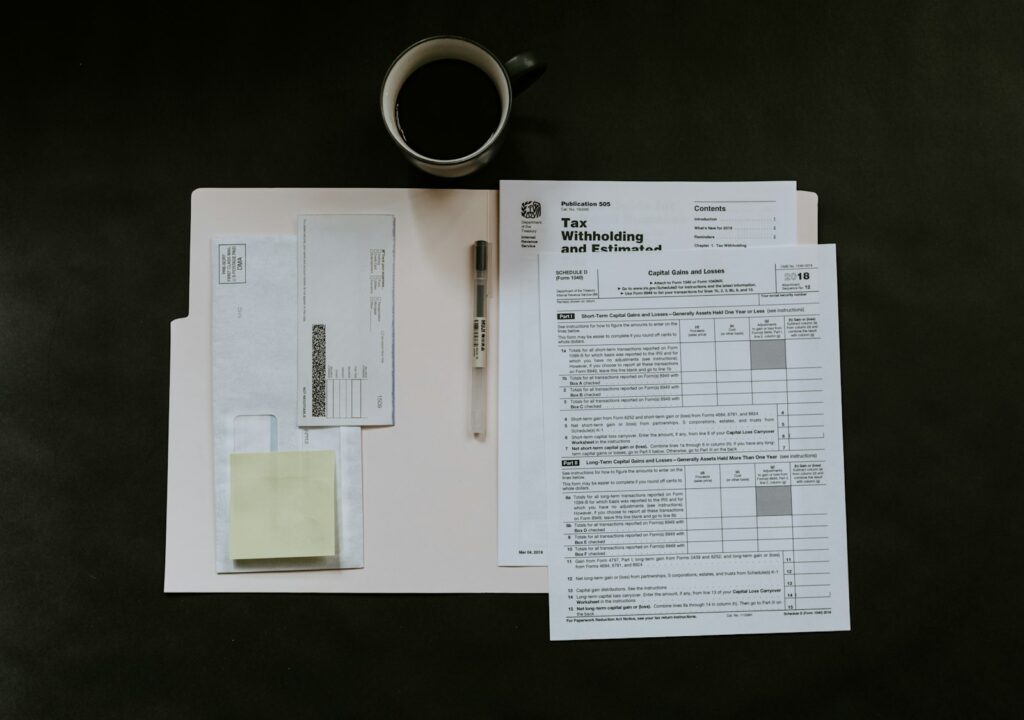
When a Japanese company earns income from the U.S. without a U.S. subsidiary, the first questions are whether a U.S. return is required and, if so, which one. The answer is Form 1120-F (U.S. Income Tax Return of a Foreign Corporation). This article covers when Form 1120-F is required, the deadlines, and the “protective return” — filing even when you believe you owe no U.S. tax.
Which Foreign Corporations Must File
A foreign (Japanese) corporation generally must file Form 1120-F when:
- It is engaged in a U.S. trade or business and has effectively connected income (ECI). Filing is required regardless of the amount of income, and even at a loss.
- It has U.S.-source income on which the required withholding was not fully satisfied (leaving tax due).
- It takes a treaty-based position that its income is not taxable in the U.S. under the US-Japan tax treaty; the return is filed to disclose that position on Form 8833.
By contrast, if the only U.S. income is FDAP income (dividends, interest, royalties) and the payer correctly withheld tax (including at reduced treaty rates), Form 1120-F is generally not required.
Filing Deadlines
For a calendar-year filer, the deadline depends on whether the corporation has an office or place of business in the U.S. (as of 2026):
| Situation | Due date | Extended due date (Form 7004) |
|---|---|---|
| Has a U.S. office or place of business | April 15 (15th day of the 4th month after year end) | October 15 |
| No U.S. office or place of business | June 15 (15th day of the 6th month after year end) | December 15 |
Want an IRS Enrolled Agent to handle your business return? Quotes are free. Request a quote →
The “18-Month Rule”: Lose the Deadline, Lose Your Deductions
A harsh rule unique to foreign corporations: if Form 1120-F isn’t filed within 18 months of the original due date, deductions and credits are generally disallowed and tax is imposed on gross income (Treas. Reg. §1.882-4). In the scenario “we assumed we had no PE and didn’t file, but the IRS later found a PE on audit,” this rule can produce a severe result: tax on gross receipts with no offsetting expenses.
The Protective Return Option
The protective return is designed for exactly that risk. You file Form 1120-F on time while taking the position that you are not engaged in a U.S. trade or business, or that you have no PE under the treaty and therefore no U.S. taxable income. The return shows no taxable income (income and expense details are not reported), and you attach a statement that it is a protective return, along with the treaty position on Form 8833.
If the IRS later determines that a PE existed or that you were engaged in a U.S. trade or business, the protective return preserves your right to be taxed on net income rather than losing deductions under the 18-month rule. For Japanese companies with U.S. sales activity, it’s a cost-effective insurance policy in any year where the answer is unclear.
Related Issues to Keep in Mind
- Branch Profits Tax: if there is ECI, an additional tax (0-5% under the treaty) applies to the deemed remittance of after-tax profits.
- State taxes: tax treaties don’t apply to state taxes. In states where you have sales or employees, state income or franchise tax filings may be required even without a federal PE.
- EIN: filing Form 1120-F requires the Japanese corporation’s own EIN, obtained with Form SS-4.
Frequently Asked Questions
Q: We only export products from Japan to U.S. customers. Do we need Form 1120-F?
A: Pure export sales — contracts concluded in Japan and goods shipped from Japan — generally don’t amount to a U.S. trade or business, so Form 1120-F isn’t required. The analysis changes if you hold inventory in the U.S. or a U.S. agent concludes contracts on your behalf, so review the actual facts of your transactions.
Q: Doesn’t filing a protective return invite an audit?
A: The protective return is a procedure expressly provided for in Treasury regulations and isn’t itself an audit trigger. Not filing and then having a PE found later is far more damaging.
This article is provided for general informational purposes only and is not a substitute for individualized tax advice. Whether a filing is required and which treaty position to take depend on specific facts, so please consult a professional.
Summary
A Japanese corporation engaged in business in the U.S. must file Form 1120-F, due April 15 or June 15 depending on whether it has a U.S. office. Because deductions are disallowed once 18 months pass after the due date, filing a protective return in any year where PE status is uncertain is standard practice for preserving your rights.
Need help with a business return? CLT NY INC. prepares corporate and LLC returns (Form 1120, 1120-S, 1065 and state returns) for small businesses, in English or Japanese. Fees and the process are on our U.S. corporate tax return service page, and the quote, payment, documents and progress are all handled in our own app.
Related Articles
- Permanent Establishment (PE) Risk: What Happens When Head-Office Staff Sell in the U.S.
- US Market Entry for Foreign Companies: Branch vs. Subsidiary, Compared on Tax and Legal Liability
- Understanding the Japan-U.S. Tax Treaty: How to Reduce Withholding Tax Rates on Dividends, Interest, and Royalties
- Paying a Japanese Parent Company: Withholding on Royalties, Service Fees, and Interest, Forms 1042/1042-S, and W-8BEN-E
U.S. CORPORATE TAX RETURNS
Need help with your company's tax return?
Forms 1120, 1120-S, 1065 and 5472, plus New York State and NYC filings, for U.S. subsidiaries of Japanese companies and owner-run LLCs and S corporations. Prepared by an IRS Enrolled Agent, in English or Japanese. Free estimate.
See corporate tax returns →